Our History
- Founded in 1849
- Recognized as a National and State Historic Site
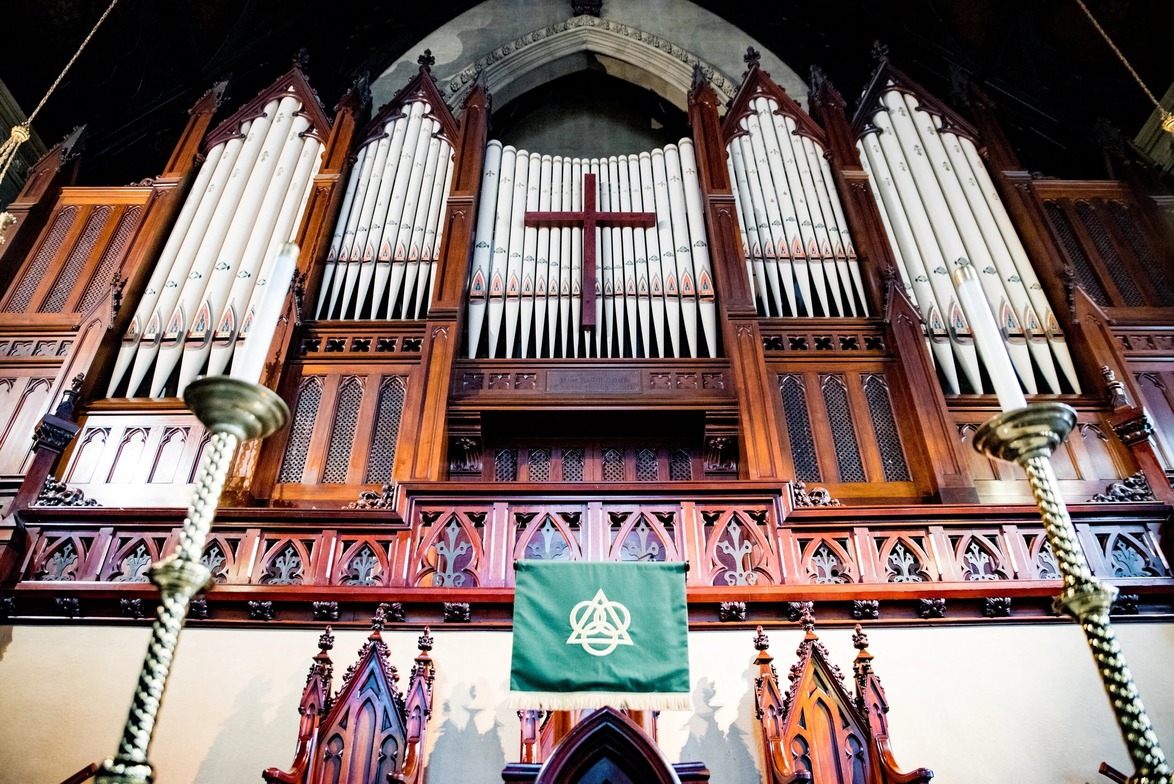
- Houses a historic Wangerin-Weickhardt organ (1914) with 3,253 pipes
- Roof span exceeded in width only by Westminster Hall in London
- Designed by architect Albert H. Jordan
- Tallest church steeple in downtown Detroit. Rises approximately 265 feet (81 meters) into the air
- Visited by President Theodore Roosevelt on September 21, 1902
Visiting the Building
Tours of the building are available by request. For more information, contact Alison Grosch at om@fortstreet.org






Founded in Faith (1849–1855)
Fort Street Presbyterian Church was founded in 1849 as the Second Presbyterian Church of Detroit. In 1855, the congregation completed its current sanctuary and took the name Fort Street Presbyterian Church.
Designed by architect Albert H. Jordan, the building stands as one of the nation’s finest examples of Gothic Revival architecture and is recognized as both a National and State Historic Site. From the beginning, the church was designed to be a prominent place of worship and gathering in the growing city.
The sanctuary seats more than 900 people beneath a soaring hammer-beam roof, rivaled in width only by London’s Westminster Hall. The space is known for its exceptional acoustics, historic organ, and artistic details, including early tile work by Mary Chase Stratton, founder of Pewabic Pottery.
A Church Changed by Its City (Late 1800s–Early 1900s)
When the church was first built, it stood at the center of a prosperous neighborhood and served many of Detroit’s industrial leaders. By the 1890s, the surrounding community had changed significantly, becoming more diverse and reflective of the broader city.
Rather than retreat from this change, Fort Street leaned into it. The congregation’s identity began to shift from social prominence to mission, service, and engagement, setting the tone for the next century of ministry.
A Center of Care and Mission (1910s–1940s)
During the 1910s and 1920s, Fort Street became a hub of mission activity, drawing people from across metropolitan Detroit who were committed to serving the city.
During World War II, the church gymnasium served as a dormitory for servicemen arriving at nearby Union Station. More than 60,000 soldiers passed through Fort Street’s doors, receiving rest, shelter, and hospitality during a time of global upheaval.
This period cemented Fort Street’s identity as a place of refuge and care.
Feeding Body and Soul (1969–Present)
In 1969, Fort Street formalized its long-standing commitment to care through what became the Open Door ministry, offering food, medical care, clothing, and support to hundreds of people each week.
This work continues today through partnerships, outreach, and on-site ministries that serve neighbors experiencing poverty, housing insecurity, and trauma. The church’s lower level now hosts outreach teams providing medical care and compassionate presence to those most in need.
A Living Faith for Today
Out of this long history has grown a living faith for the present day. Fort Street remains committed to nurturing both spiritual and physical well-being, holding together worship, justice, curiosity, and compassion.
Today, Fort Street is a community of open hearts and thoughtful faith, shaped by its past and attentive to the needs of the present. We continue to practice a faith that is rooted, honest, and deeply connected to the life of the city.

-
Location